
Get Screened Hawai‘i


Colorectal cancer (or colon cancer, for short) is cancer in the colon or rectum and affects both
men and women. In Hawai‘i, colon cancer is the 3rd most common diagnosed cancer among men and women. Approximately 700 people are diagnosed, and 225 people die from colon cancer each year. It is the third leading cause of cancer death in men and fourth among women1.
Take Action!
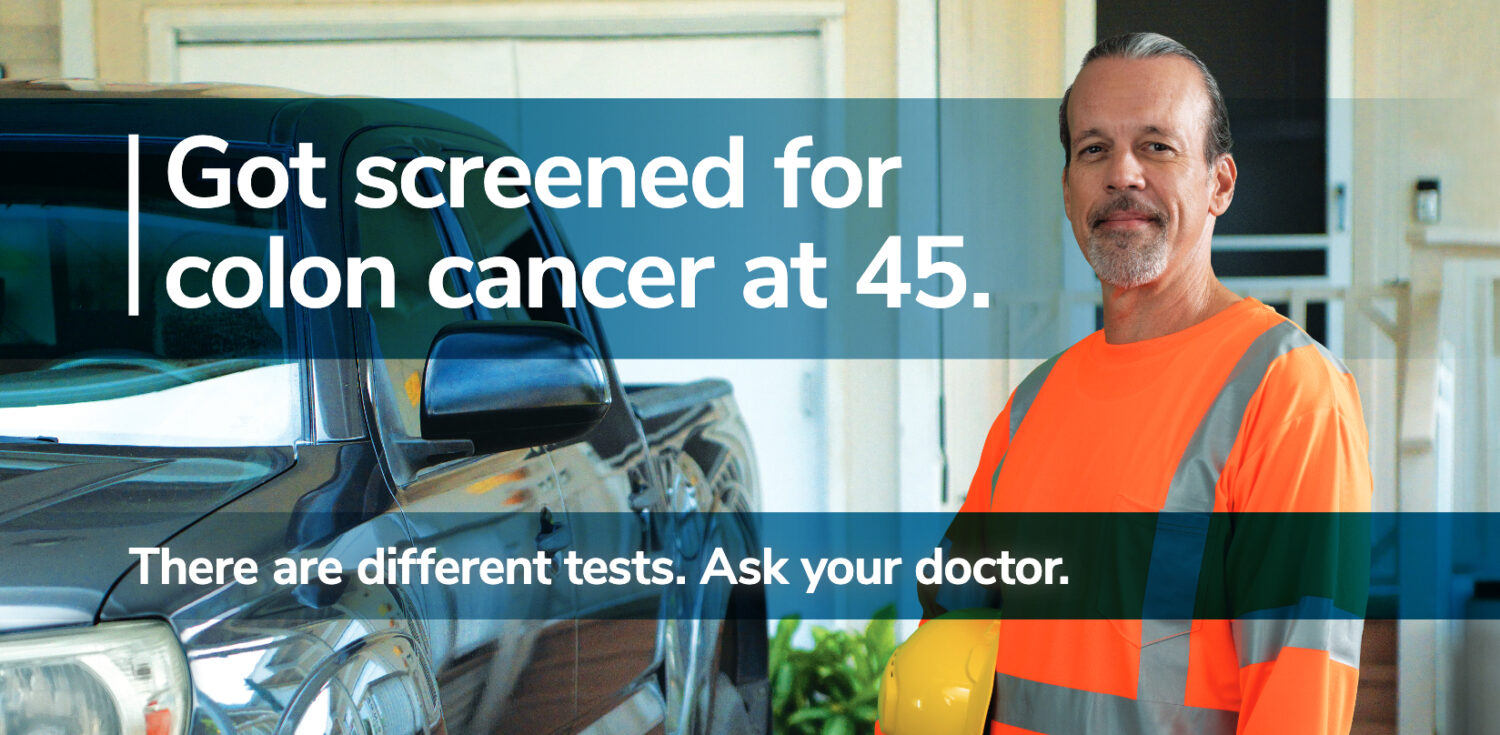
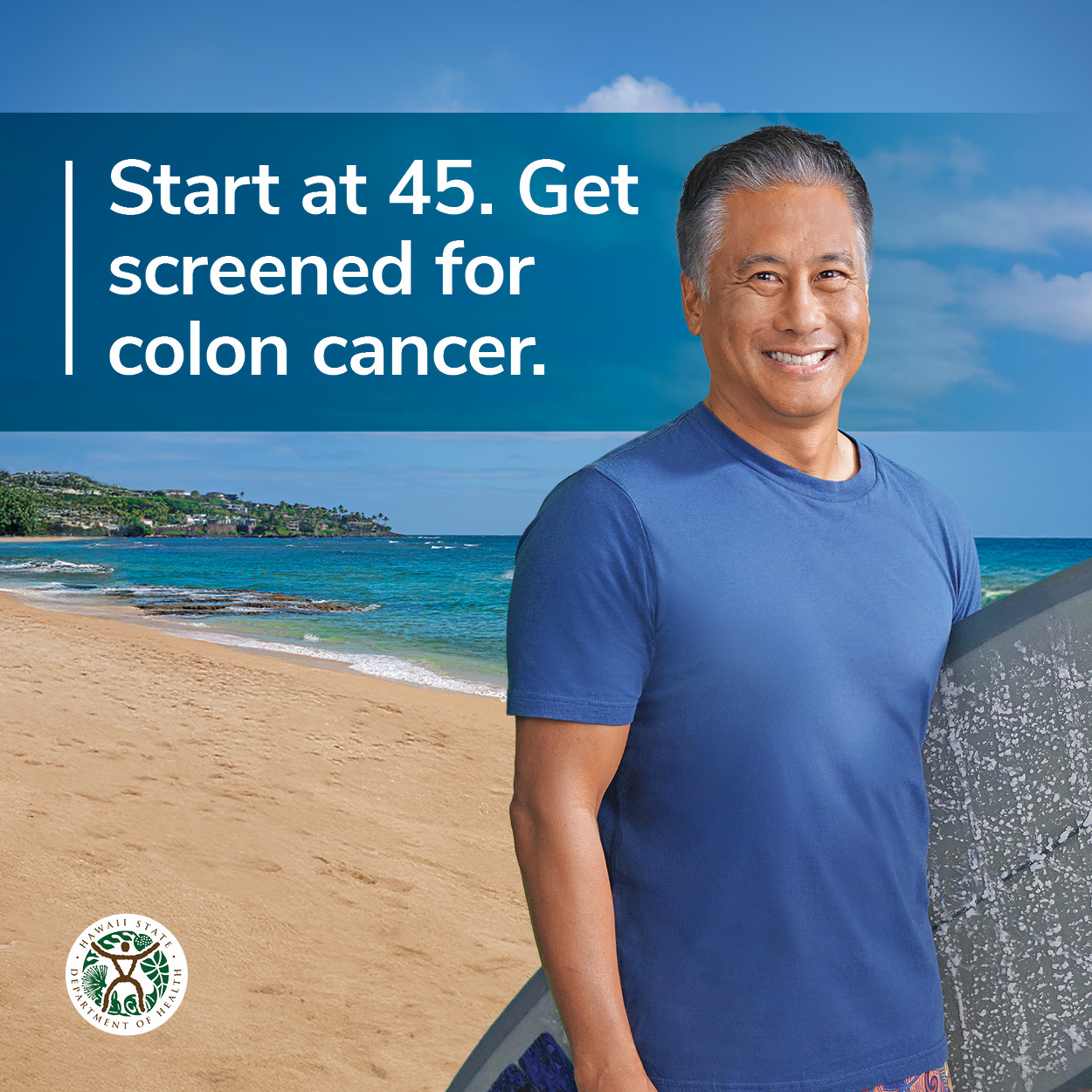
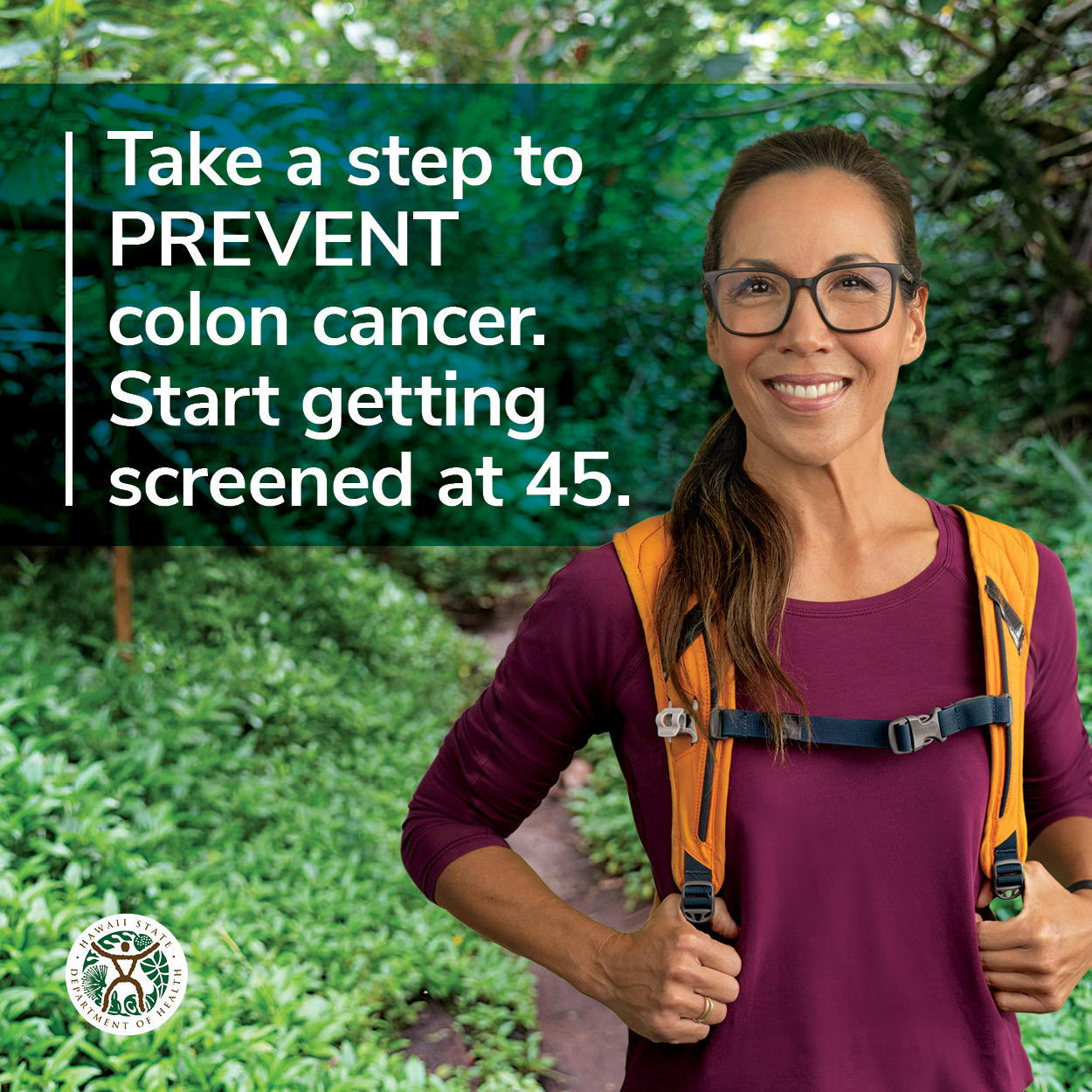
- Colon cancer screening starts at age 45. Talk to your health care provider today.
- There are different types of colon cancer screening tests. Your health care provider
can help you find the test that is right for you. - If you don’t have a health care provider, call Aloha United Way 2-1-1.
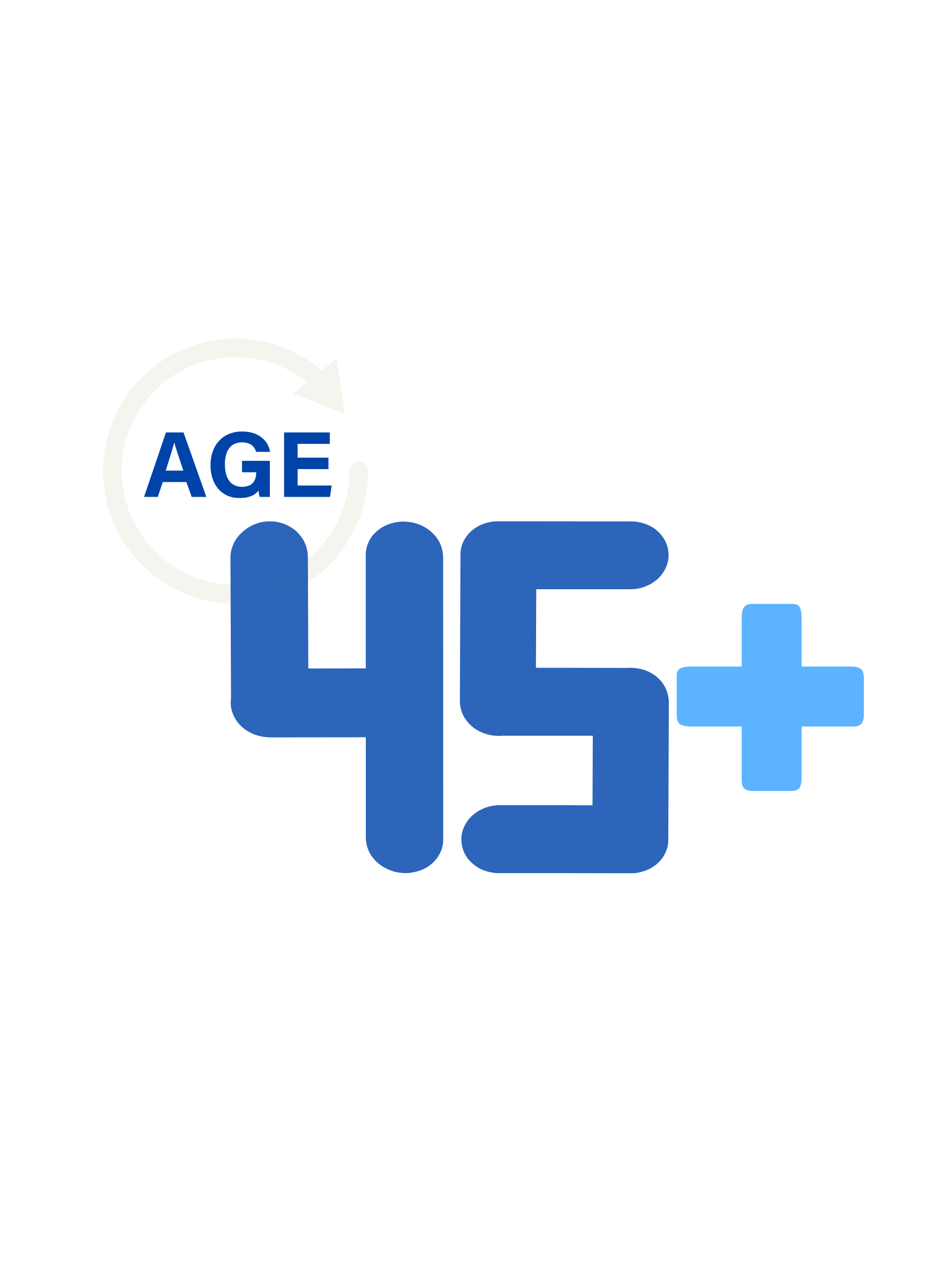
The U.S. Preventive Services Task Force recommends colon cancer screening for everyone 45 to 75 years.
Learn more at Talking with Your Doctor about Colorectal Cancer| CDC

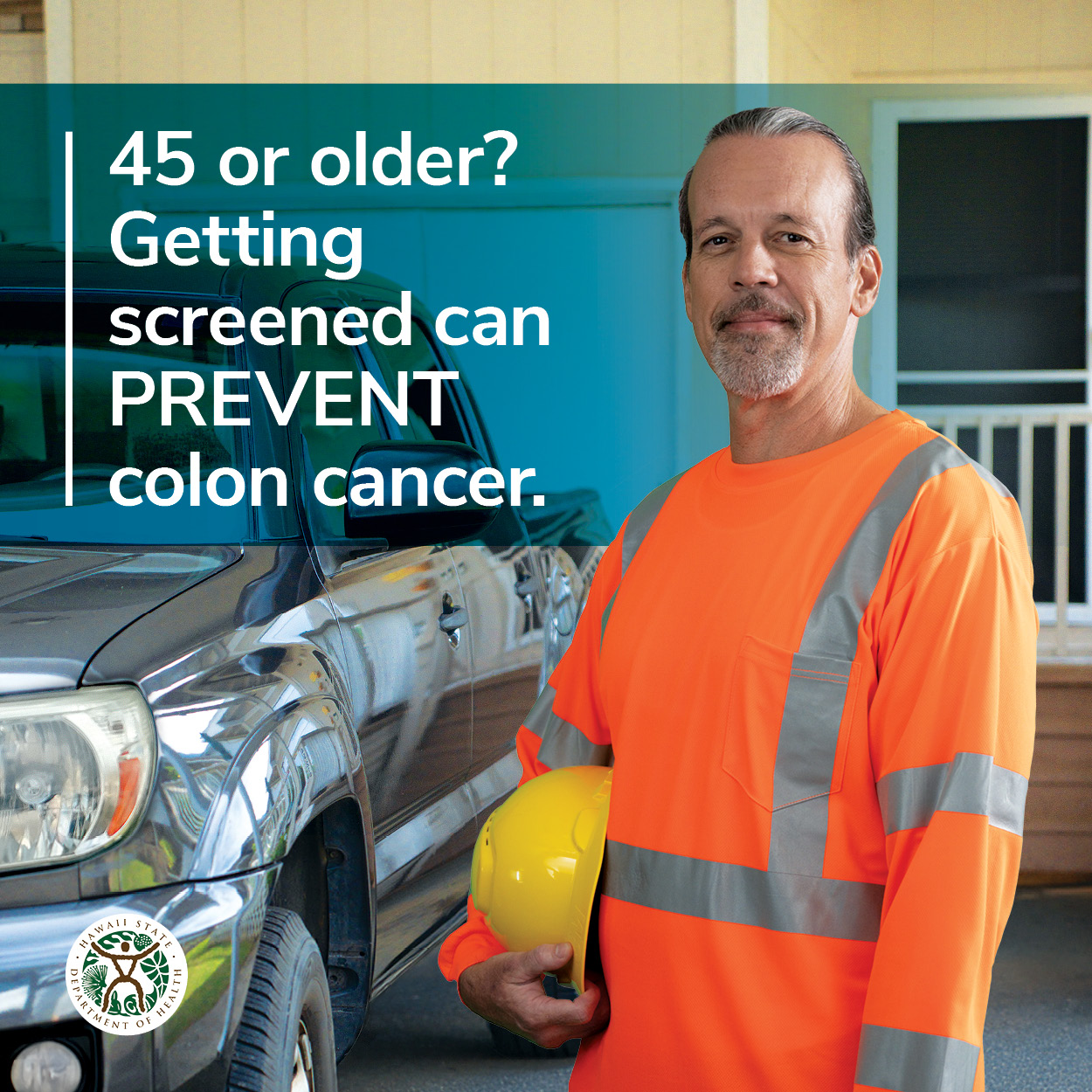
Screening Saves Lives. Cancer screening can prevent colon cancer. A colonoscopy can find precancerous polyps—abnormal growths in the colon or rectum—that can be removed before they turn into cancer.
Screening test options:


Flexible
Sigmoidoscopy*

Stool tests*

Computed
tomography (CT)*
*It is important to know that if your test result is positive or abnormal on some screening tests (stool tests, flexible sigmoidoscopy, and computed tomography colonography), a diagnostic colonoscopy will be needed as the next step. Learn more at Screening for Colorectal Cancer | CDC
Symptoms of colon cancer
Colon cancer doesn’t always cause symptoms.
Talk to your health care provider, if you have any of the following symptoms:
- A change in bowel habits.
- Blood in or on your stool (bowel movement).
- Diarrhea, constipation, or feeling that the bowel does not empty all the way.
- Abdominal pain, aches, or cramps that do not go away.
- Unexplained weight loss.
Steps you can take to reduce your risk for colon cancer| CDC
Spread the Word

SHARE
SHARE
SHARE

SHARE
SHARE
SHARE

1Hawaii Cancer at a Glance, 2014-2018.